
Wednesday, 31 October 2012
TIP: Cleaning Pen Marks from Walls
To clean your pen marks on walls, simply use a piece of cloth or sponge and some vinegar.

Monday, 29 October 2012
RECIPE: A Quick High Protein Breakfast Dish

Ingredients:
- Eggs (I use one egg per person. So, if you are cooking for two people, you put 2 eggs)
- Natural yoghurt (you can be flexible with that but I generally add about a glassful of yoghurt per egg. The more yoghurt you put, the more savoury it will become and the larger the dish will be.)
- Approximately a spoonful of flour (if you add more, it will become thicker. If you add less, it will be runnier)
- A pinch of salt
- Olive oil
Mix all ingredients except for oil in a bowl until all nice and smooth.
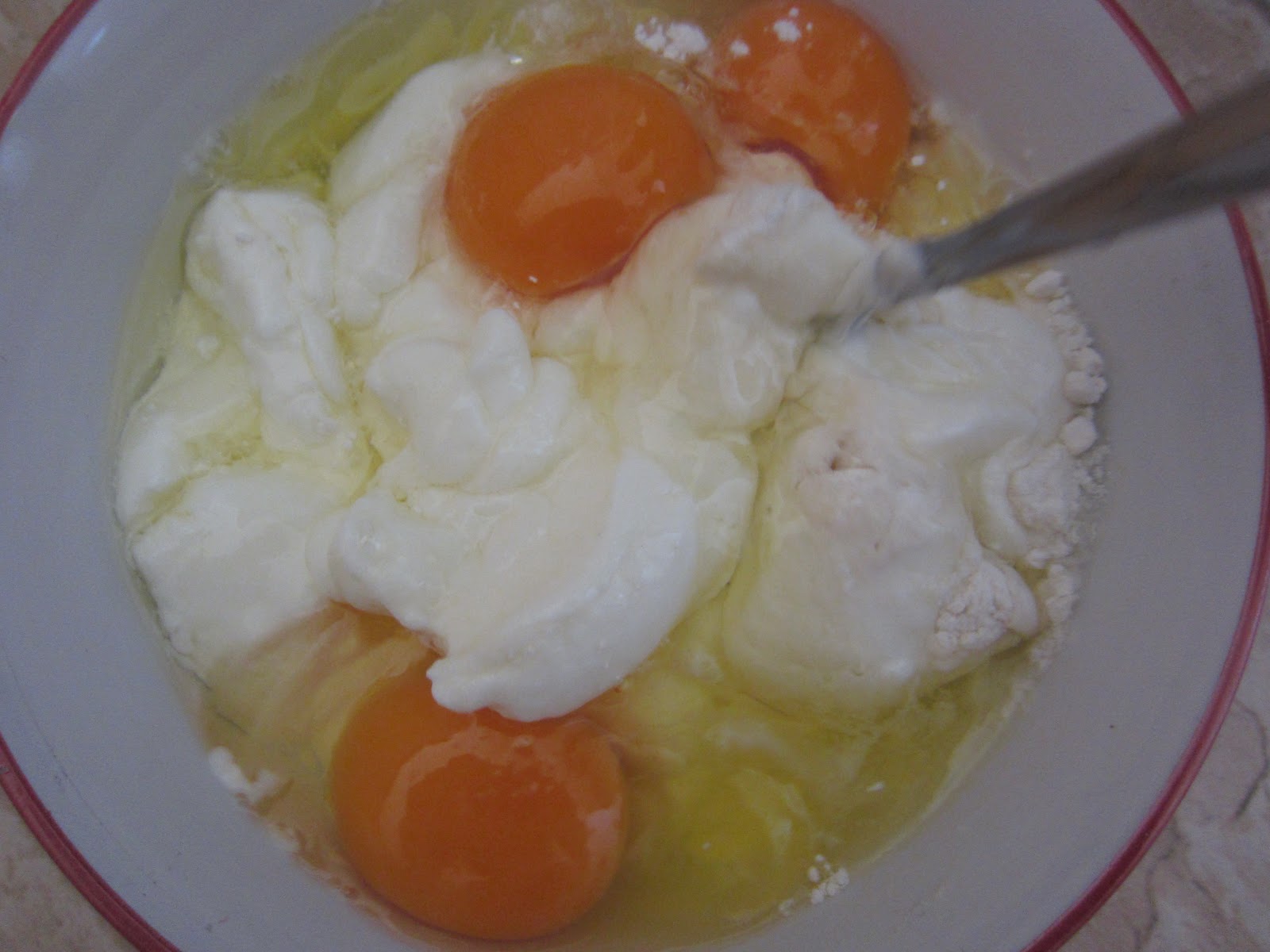
Warm up oil in a saucepan/pan and add the mixture to it.

Stir until boiling (it will only take a few minutes) and then turn the heat down and let it boil gently for 7-8 minutes while stirring it once in a few minutes.

This dish goes really well with some bread.

Enjoy!
 |
| Served with chia |
Saturday, 27 October 2012
DID YOU KNOW ...? (43)
 |
| Photo credit |

Wednesday, 24 October 2012
GUEST POST: Taking Kids' Photos
Here is an entry on some tips on taking kids' photos from Janet of Mum the Photographer. Thank you Janet for your contribution.
1. Posed Photos.
To be honest, I don’t often take posed photos of my children. It can be
quite tricky to get them looking natural. Tricky but not impossible.
Firstly, I find a well-lit place in my house and free it from clutter –
the general everyday things we have in our houses like a few letters,
pens, newspapers, a stray toy or two. These things can be distracting in
the background of a photo. Once I’ve got my spot ready, I then get my
son over as there is no point having them wait around while I get
prepared. I will face my son towards the window so that the light is
captured in his eyes. But I don’t pick up my camera straight away. Even
my sons who have been photographed thousands and thousands of times
don’t have a natural smile at the ready as soon as my camera comes up.
You need some easy interaction first. You will know your own child the
best – in my case a bit of ribbing can work, or tickling, or having them
pull their silliest face and showing them mine etc. Once they’ve
relaxed my camera then comes out and I take about 10 – 20 photos while
still interacting with them. If I’m taking a posed photo it is generally
for a reason – in this case it was to capture his first missing front
tooth. I chose to have his face almost entirely fill the frame. If I’d
pulled back a bit, there wouldn’t have been as much focus drawn to his
face.

2. Planned photos. This
is often my approach to taking photos of my children because as “Mum
the Photographer” my goal is to create a strong photographic record of
my children as they grow up. I read Gretchin rubin’s book “The Happiness
Project” and her quote “the days are long but the years are short” has
really stuck with me. I want photos to help me remember exactly how my
children were growing up. I don’t really get that from posed photos –
sure, I can see what their face was like when they lost their first
tooth, but sitting on a chair smiling isn’t really how they spend their
time. So if it’s not an impromptu activity, I’ll often bring the
activity they are doing to a place in my house with great light. Why not
give yourself the best opportunity to capture a great photo. And apart
from again clearing distracting clutter away from the background, that
is all the planning I’ll do to get the photo. I won’t ask the boys to
hold the toy in a certain way, or look this way, or arrange the blocks
so that their colour pattern is pleasing. I want to get a photo of how
they are playing … because all too soon, this phase of play will have
passed and they’ll be onto something else. I want real memories in my
albums and on my walls. Other planned photos I take will often be
outside, late in the afternoon when the light is soft. Again, I won’t
direct how they should play, but rather capture them as they are running
off their late afternoon steam.

3. Impromptu photos. These are those photos you take where there is absolutely no planning or posing at all. They are completely natural, and I think sometimes the absolute best photos in your album. They might not be the clearest photos because perhaps your light wasn’t great but there is no point asking your child at this stage to stop what they are doing and relocate to near the nice big window. It’s also in these times that you grab whatever camera you have nearby and mostly for me, these are the photos I’ll snap on my iPhone. I make a point of seldom using my flash when I take photos but impromptu photos are when I may well use a flash and an auto setting just so that I can capture the funny or precious moment. I recently had one of these moments on a plane … Will giggled uncontrollably for about 5 minutes over a joke. He was so infectious that the people around us started laughing too. This blurry photo is one of my favourites from over our school holidays.

***
My sister-in-law and I started Mum the Photographer
as a way of sharing our passion for photographing our own children.
We’re not about taking perfect photos (in fact mine are often far from
perfect!) but more about remembering to capture our children and their
personalities in their everyday lives.
When
I think about taking photos of my own children I realise that broadly
they fall into three scenarios – posed, planned and impromptu.


3. Impromptu photos. These are those photos you take where there is absolutely no planning or posing at all. They are completely natural, and I think sometimes the absolute best photos in your album. They might not be the clearest photos because perhaps your light wasn’t great but there is no point asking your child at this stage to stop what they are doing and relocate to near the nice big window. It’s also in these times that you grab whatever camera you have nearby and mostly for me, these are the photos I’ll snap on my iPhone. I make a point of seldom using my flash when I take photos but impromptu photos are when I may well use a flash and an auto setting just so that I can capture the funny or precious moment. I recently had one of these moments on a plane … Will giggled uncontrollably for about 5 minutes over a joke. He was so infectious that the people around us started laughing too. This blurry photo is one of my favourites from over our school holidays.

If
you’d like more information on how to best optimise your light for
taking posed or planned photos, then “take a peek” at our lighting
module from our home page. (www.mumthephotographer.com)
We’d
love for you to join our “Mum the Photographer” community … check out
our bog and facebook page for weekly tips on improving your photos and
interesting ways in which to create a photographic record of your child
as they grow up. If there is something that you think would help you out
when taking photos of your own children please get in touch with us on
facebook or email info@mumthephotographer.com
All the best
Janet from Mum the Photographer
Monday, 22 October 2012
HOMEMADE WATER FILTER
The video above shows how to make a water filter at home. In my opinion, it doesn't seem to be much complicated and it would be good to know how to make your own water filter in case of an emergency.
Saturday, 20 October 2012
DID YOU KNOW ...? (42)
 |
| Photo credit |
Information source: Katham Springs (Kangaroo Island) biodynamic free range eggs.
Thursday, 18 October 2012
USEFUL INFORMATION ON BROCCOLI
 |
| Photo source |
Nutrients and health benefits:
- very high in vitamin C
- rich in vitamin A
- has high levels of carotenoids (vitamin A like substances)
- high in fiber (consumption of large amounts of fibre-rich foods may cause gas and should be reduced or avoided in people with diarrrhea and some other colon related problems)
- has generous amounts of calcium
- rich in folate (which may be helpful in prevention of some birth defects and to avoid heart disease and strokes)
- a source of phytochemicals, or plant chemicals, that may have anticancer properties
- loaded with antioxidants
- very low in fat and calories
How to Choose, Store and Consume:
The broccoli heads should be firm and compact. Broccoli should be dark or bright green to purplish in colour and has closed flower buds. Stalks should be cleanly cut and firm too.
Broccoli is not suitable for dry storage. It should ideally be stored at 32F with the humidity of 95%.
 |
| Photo source |
If you are going to freeze your broccoli, then cut it into florets, blanch it for two minutes and cool down to 41F before packaging and placing in the freezer which can stay there for up to 3 months.
Broccoli can be consumed raw or cooked. It can be purchased fresh or frozen. It can be cooked whole or broken into florets. It has the most nutrients when eaten raw. If cooking with the stems, cut through thick stems to allow even cooking. You can steam, boil, or pan-fry broccoli. Some people even microwave it. Do not overcook broccoli and make sure it still retains the bright green colour even when cooked.
You can use broccoli in many types of meals but our two favourite cooked broccoli dishes are broccoli salad and broccoli soup. Then comes vegetarian stir-fried noodles with some broccoli along with a few other types of vegies or stir-fried mustard seeds with broccoli.
We often eat the stem raw. We just peel off the tough skin around it and cut it into slices or finger length strips. It is crispy, juicy and has a fresh taste.
When Mr. Junior started eating solids and was safe to eat broccoli, I used raw broccoli stems or lightly boiled broccoli florets as a finger food or a snack for him. He has always enjoyed it and he much prefers raw or very lightly blanched broccoli to casseroles or omelettes with broccoli. When I am preparing broccoli to make a soup with for example, he always tries his tricks to get some uncooked pieces of broccoli off me before I use them.
Subscribe to:
Posts (Atom)