
Saturday, 29 September 2012

Thursday, 27 September 2012
MULTILIGUALISM: Advantages, Disadvantages, Tips and More
Living in a multicultural country, Australia, it is unavoidable to be exposed to many languages in daily life. In some cases, people learn a second (or a third or more) language from external sources and the LOTE (Languages Other Than English) program at schools where I live is one form of the exposure. However, in many cases, the learning occurs more naturally as there is at least one person in the family that speaks at least one other language apart from English from whom kids have an option of learning another language.
There are often discussions and various views on bilingualism (or multilingualism in general) in families mostly because it is argued to confuse the kids and the affects of learning more than one language on the learning speed and quality of English in young children. Some parents never or seldom use their mother tongue and try to promote the school language the most and communicate with their children in that particular language whereas some others prefer to encourage the learning of their native language especially at home.
This source explains the benefits of bilingualism in kids as below:
"There's often a slight lag in the speech-language development of both languages in a bilingual household. Over time, though, bilingual children can catch up with their peers and have the benefit of communicating in two languages with proficiency," says Patti Hamaguchi, author of Childhood Speech, Language, and Listening Problems: What Every Parent Should Know.
In other words, kids raised in a two-language household tend to start talking a bit later, but eventually they get on track. And in the long run, speaking two languages (or more) offers big benefits.
There are many other sources consistently demonstrating that there are clear cognitive advantages of multilingual people over monolinguals. There are many research results that emphasise the beneficial effects of high level of proficiency in more than one language in children in many ways such as the positive link between their educational and linguistic achievement and multilingualism.
Before moving onto some suggestions on how to encourage multilingualism in babies and children, it should be noted that children's mother tongues are fragile and can easily be lost in early years of school.
How to Encourage Multilingualism
Communicate: It is claimed that language is learnt primarily through communicating with others. Take every opportunity to interact with your children in the targeted language (your native language).
Use It Well: To be able to teach your children how to use a language appropriately, you need to be a good example too. Use the language well. Use rich vocabulary, use correct grammar etc.
Quality and Quantity: Pay attention to the quality and the quantity of your communication with your child in your target language.
See Opportunities: Everyday life offers many opportunities to practise your language. Talk about colours, shapes, numbers, feelings and so forth. You can do this naturally, without explicit teaching. A casual learning environment would work well especially for young children. As you are out for a walk with your child, talk about the weather, the cars around you, the flowers, the smells you can smell etc. When you are cooking, talk about the ingredients, preparation methods, time it is likely to take, the taste you are expecting it to have and more. When you are changing your baby's nappy, talk about what you are doing, sing a song (in your mother tongue) and so forth. Read pictures, signs and books, tell stories, make up silly songs and dances to go with them if your child responds to them better. Whatever he shows interest in, just try to expand on it using your language.
Use Facilities Around You: Go to your local library with your child and encourage the reading and borrowing of some books and other materials in your first language, try to join the story times of libraries in your language whenever possible, and use the facilities of your child's school to improve his language learning if applicable.
Make it Fun: Don't force your child to learn a language. Encourage and make it a part of your life. Play games with him in that language. Buy or make flash cards, and play word games. Matching games with pictures and puzzles etc would all be helpful too. If your child can read, ask him to read as many plate numbers as he can (in your mother tongue) when you are out for a drive (believe it or not, I used to challenge myself with plate number reading in a second language in a place where there was a constant considerable amount of traffic and I was a university student at the time. I found it fun and helpful). Another game idea is that taking turns with your child, say a word (eg name, vegetable, fruit, or animal) that begins with a particular letter in your mother tongue (eg. Foods that begin with the letter 'L': lettuce, lemon, lime, loquat etc).
Acknowledge and appreciate what you have today!
 |
| Photo taken from http://blog.lib.umn.edu |
This source explains the benefits of bilingualism in kids as below:
"There's often a slight lag in the speech-language development of both languages in a bilingual household. Over time, though, bilingual children can catch up with their peers and have the benefit of communicating in two languages with proficiency," says Patti Hamaguchi, author of Childhood Speech, Language, and Listening Problems: What Every Parent Should Know.
In other words, kids raised in a two-language household tend to start talking a bit later, but eventually they get on track. And in the long run, speaking two languages (or more) offers big benefits.
There are many other sources consistently demonstrating that there are clear cognitive advantages of multilingual people over monolinguals. There are many research results that emphasise the beneficial effects of high level of proficiency in more than one language in children in many ways such as the positive link between their educational and linguistic achievement and multilingualism.
Before moving onto some suggestions on how to encourage multilingualism in babies and children, it should be noted that children's mother tongues are fragile and can easily be lost in early years of school.
How to Encourage Multilingualism
Communicate: It is claimed that language is learnt primarily through communicating with others. Take every opportunity to interact with your children in the targeted language (your native language).
Use It Well: To be able to teach your children how to use a language appropriately, you need to be a good example too. Use the language well. Use rich vocabulary, use correct grammar etc.
Quality and Quantity: Pay attention to the quality and the quantity of your communication with your child in your target language.
See Opportunities: Everyday life offers many opportunities to practise your language. Talk about colours, shapes, numbers, feelings and so forth. You can do this naturally, without explicit teaching. A casual learning environment would work well especially for young children. As you are out for a walk with your child, talk about the weather, the cars around you, the flowers, the smells you can smell etc. When you are cooking, talk about the ingredients, preparation methods, time it is likely to take, the taste you are expecting it to have and more. When you are changing your baby's nappy, talk about what you are doing, sing a song (in your mother tongue) and so forth. Read pictures, signs and books, tell stories, make up silly songs and dances to go with them if your child responds to them better. Whatever he shows interest in, just try to expand on it using your language.
Use Facilities Around You: Go to your local library with your child and encourage the reading and borrowing of some books and other materials in your first language, try to join the story times of libraries in your language whenever possible, and use the facilities of your child's school to improve his language learning if applicable.
Make it Fun: Don't force your child to learn a language. Encourage and make it a part of your life. Play games with him in that language. Buy or make flash cards, and play word games. Matching games with pictures and puzzles etc would all be helpful too. If your child can read, ask him to read as many plate numbers as he can (in your mother tongue) when you are out for a drive (believe it or not, I used to challenge myself with plate number reading in a second language in a place where there was a constant considerable amount of traffic and I was a university student at the time. I found it fun and helpful). Another game idea is that taking turns with your child, say a word (eg name, vegetable, fruit, or animal) that begins with a particular letter in your mother tongue (eg. Foods that begin with the letter 'L': lettuce, lemon, lime, loquat etc).
Acknowledge and appreciate what you have today!
Monday, 24 September 2012
HOMEMADE BUTTER RECIPE
This is a recipe that I have learnt from my much loved mother who has always been a great example of self sufficiency and a homemade guru.
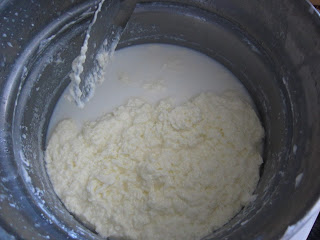
 Add some salt and mix it. If you are planning to use this butter as a spread, you can choose not to add salt to it. However, if you are going to leave it in your fridge and use it in your cooked meals, you can add salt (about a teaspoonful).
 You may not need to add any more salt to your meals if cooked with the salted butter, however, it depends on how much salt you prefer to have in your foods.
 Note: Instead of wasting the water that is left over after taking the butter/the hard bits after using the blender, use it in ricotta cheese making. Add some salt to it and bring it to boil. Simmer for a while and take the cheese/the solid textured product out and put it in a strainer. When drained and cold, place it in the fridge. You can use your homemade ricotta cheese in omelette or as a pastry filling.
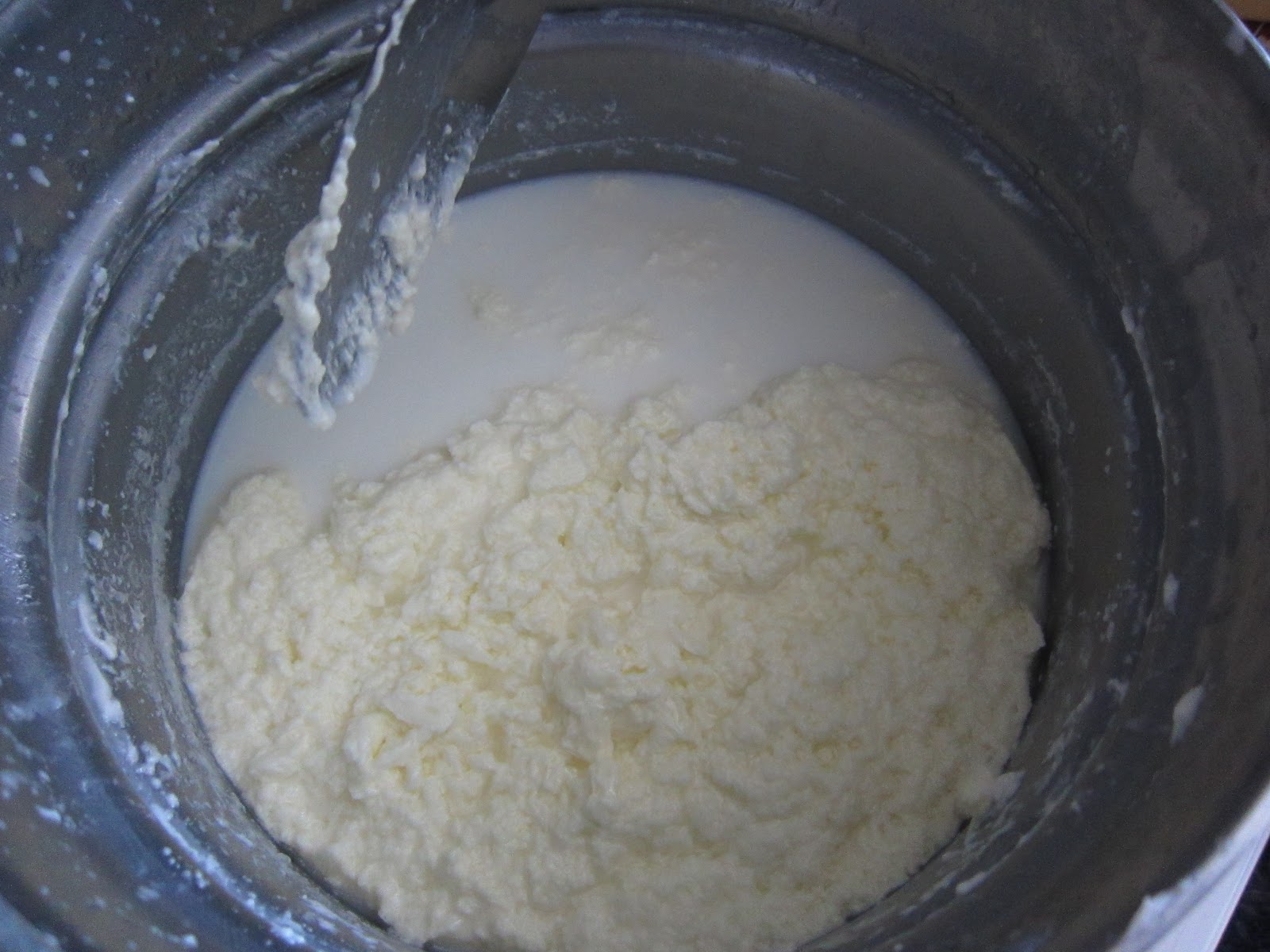
Collect the cream of your homemade yoghurt. You can use some of your fresh cow's milk's cream to add to it too. Once you have enough to work with (perhaps about 300g-500g), mix it well with a blender for a few minutes. If it melts too much while going through the blender, add some cold water. 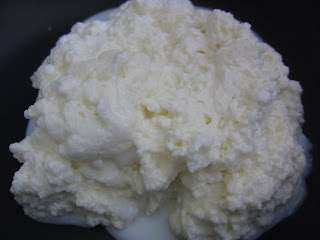
Take out the hardened bits of the cream. Put it under cold water a few times (as if washing it a few times). This procedure also helps with it to form a more solid texture.


Saturday, 22 September 2012
DID YOU KNOW ...? (38)
 |
| Photo Credit |
Thursday, 20 September 2012
FOOD DESIGN (7)

Another smart design idea this time using some pears by some skillful people. Amazing!
Monday, 17 September 2012
GUEST POST: Corflute Fabric Storage
Today, we have Jama from Little Denim Duck here. Her tutorial below will be extremely helpful in finding a nice and neat storage solution to your fabrics around the house or in your workshop as they can get out of control easily. If you are a person with a passion in sewing/crafting or work with fabrics, there is no doubt you know what I mean!

Mine used to. It was terrible! I had so many gorgeous fabrics, all piled on top of each other – I could never find what I was after, and every time I’d pull one out, the whole pile would fall over!

Step 1: Iron your fabric. This is not an essential step, especially if you have just taken it off the wash-line and it’s relatively flat. But if it has been in a heap on the floor, and is full of creases, you will need to flatten it out to make the most of your space.
Step 2: Fold your fabric in half – selvedge to selvedge. (The selvedge is the finished edge of the fabric – often it will have the designer and fabric name printed on it.)


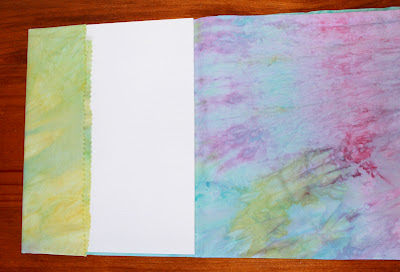
Step 4: Place your piece of corflute a few inches from the end, and fold your fabric over it...



***
I’m a mum to 3 beautiful kids, and I love to create – to sew, paint, draw, stitch, garden; the list goes on... I have always loved handmade products. I think that there's something really special about an item that's had lots of thought, time and effort put into it, and that has been made with love. After my kids were born, I felt that I needed a creative outlet from home, and so I started up Little Denim Duck – handmade kids clothing, decor, accessories and much more! www.facebook.com/littledenimduck
I love what I do, and I love sharing my experiences too. That’s how we learn. I’ve been very lucky to have met some amazing people who have taught me so much, and have helped me in so many ways.

I love what I do, and I love sharing my experiences too. That’s how we learn. I’ve been very lucky to have met some amazing people who have taught me so much, and have helped me in so many ways.
I would like to share with you an inexpensive, easy and very effective way to organise your fabric stash. I hope you love it as much as I do! - Jama

Does your fabric stash look a bit like this?

That’s where they stayed too. Until one day I discovered how to use corflute to make my own fabric bolts with... And now it looks like this!!
Here’s how I did it:
Corflute (or flute board) is the corrugated plastic sheeting that you see signs on the side of the road made of. You can buy it from hardware stores, or even try your local politician or bottle shop... they often use it for signage and it just gets thrown out afterwards, so they’re usually happy to offload it for free
I cut my corflute into approximately 12 inch x 8 inch pieces. I found this to be the best size for my cube shelving, but you may have to experiment to find the best size for your space...
This size was the perfect size for my fabrics of which I had a minimum of 1 yard... the smaller mini-bolts that you can see in my photo were approximately half this size, and fit my ½ yard fabrics well.
Once you have your corflute cut to size, you’re ready to begin!

Step 1: Iron your fabric. This is not an essential step, especially if you have just taken it off the wash-line and it’s relatively flat. But if it has been in a heap on the floor, and is full of creases, you will need to flatten it out to make the most of your space.

Step 3: Fold it in half again the same way. You should have a long, thin sheet of fabric in front of you now. Depending on the size of your corflute, you may need to fiddle with the amount of folds that you need to make it fit, but this way worked best for me.

Step 4: Place your piece of corflute a few inches from the end, and fold your fabric over it...
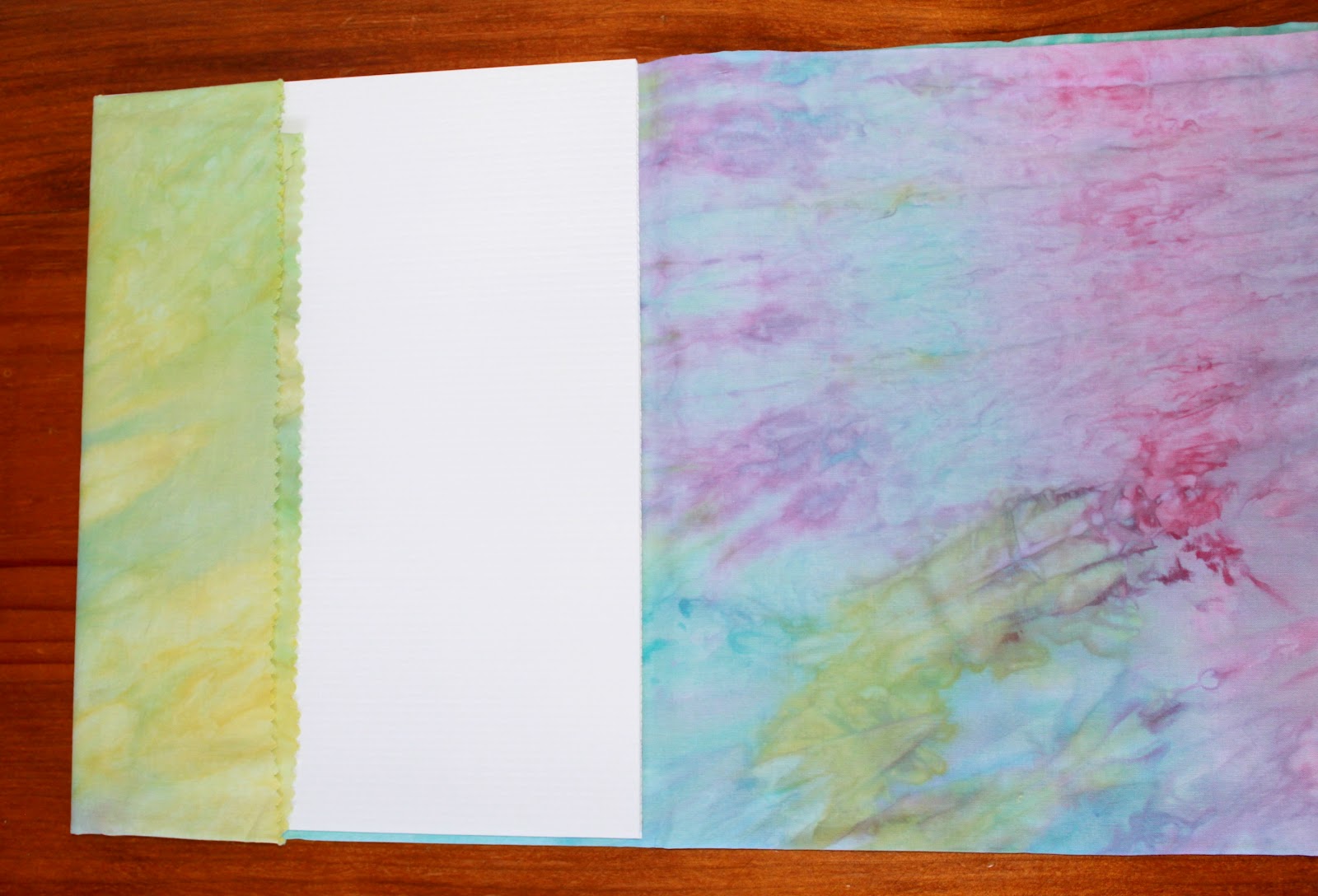

Step 5: Continue to flip your corflute over and over until almost the entire length of fabric is folded onto it.
I like to fold the end over a bit before the last fold – I just think it keeps it neater – but you don’t have to do this
I like to fold the end over a bit before the last fold – I just think it keeps it neater – but you don’t have to do this

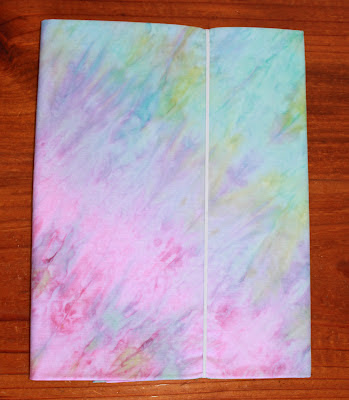
Step 6: Fold the fabric entirely onto the corflute bolt, and secure with some thin elastic. Rubber bands are not suitable for this, as they disintegrate and leave horrible marks on your beautiful fabric. I have heard of people using bobby pins also to secure the ends instead of elastic – it’s up to you what you use!

Final Step: Slide your new mini-bolt into your shelving, repeat with your other fabrics, and admire your finished product!!
Now, not only can you see all of your fabrics easily, but it looks pretty too!! Enjoy!!

Saturday, 15 September 2012

Subscribe to:
Posts (Atom)